 Free Shipping
 Easy
Easy Money-back


If whey protein’s been leaving you bloated, gassy, or just a little uncomfortable, you might have started looking around. Now you’ve found our faba bean protein. The obvious question is: is it actually comparable, or are you giving something up?
Here's a straightforward look at what the two proteins have in common, where they differ, and what most people notice after making the switch.
The short answer: Faba bean protein is a complete protein containing all nine essential amino acids, including the branched-chain amino acids important for muscle building and recovery. It's naturally dairy-free, generally easier on the stomach than whey for people with dairy sensitivity, and one of the stronger plant protein options available. For most people, it's a genuinely comparable choice to whey, not a step down.
Does faba bean protein have all the amino acids you need?
Yes. This surprises a lot of people, because plant proteins have a reputation for being "incomplete." That reputation mostly comes from proteins like rice or corn, which are genuinely low in certain essential amino acids.
Faba bean protein doesn't have that problem. It contains all nine essential amino acids, including leucine, isoleucine, and valine, the three branched-chain amino acids (BCAAs) your body needs for muscle repair and recovery.
Leucine is the one worth paying attention to. It's the amino acid most directly involved in signalling muscle protein synthesis. On a gram-of-leucine-per-gram-of-protein basis, Inna Protein's faba bean protein (10.3%) sits right in line with whey protein concentrate (10.4%) and only marginally behind whey isolate (10.8%), which typically has the highest leucine density of any protein source.
In practice, this difference is small for most people, especially if you're eating a varied diet. A systematic review and meta-analysis in Nutrition Reviews found that when total daily protein intake is adequate, the source of protein matters less than previously assumed for muscle outcomes.
If you've been steering clear of faba bean protein because you thought plant protein meant incomplete protein, that assumption doesn't hold here.
That's true for faba beans specifically - but if you're wondering whether plant-based eating in general can cover your protein needs, we break down the full picture (including daily intake targets) in How Much Protein Do Plants Actually Give You?
Amino Acid Profile (Unflavoured Protein Powder) | Total per serve: 30g
| Amino Acid | Type | Amount | Function / Role |
|---|---|---|---|
| Alanine | Non-Essential | 1.3g | Provides energy for muscles and aids metabolism. |
| Arginine | Conditional | 2.5g | Supports nitric oxide production, blood flow, and circulation. |
| Aspartic Acid | Non-Essential | 3.3g | Involved in energy production and hormone synthesis. |
| Cystine | Conditional | 0.3g | Supports antioxidant production (glutathione) and skin/hair health. |
| Glutamic Acid | Non-Essential | 4.9g | Key fuel source for gut health and a primary neurotransmitter. |
| Glycine | Non-Essential | 1.2g | Essential for collagen building, joint support, and sleep quality. |
| Histidine | Essential | 0.7g | Crucial for tissue repair, immunity, and histamine production. |
| Isoleucine | Essential (BCAA) | 1.3g | Promotes muscle tissue recovery, energy, and endurance. |
| Leucine | Essential (BCAA) | 2.5g | Key trigger for muscle protein synthesis and repair. |
| Lysine | Essential | 2.0g | Supports tissue growth, collagen creation, and calcium absorption. |
| Methionine | Essential | 0.4g | Supports metabolism, detoxification, and tissue growth. |
| Phenylalanine | Essential | 1.6g | Precursor to mood-regulating neurotransmitters like dopamine. |
| Proline | Non-Essential | 1.3g | Important for collagen synthesis, skin structure, and joint health. |
| Serine | Non-Essential | 1.6g | Plays a role in brain function and central nervous system health. |
| Threonine | Essential | 1.1g | Supports structural proteins like collagen and immune function. |
| Tryptophan | Essential | 0.3g | Precursor to serotonin and melatonin; supports mood and sleep. |
| Tyrosine | Conditional | 1.1g | Supports focus, neurotransmitter synthesis, and stress response. |
| Valine | Essential (BCAA) | 1.5g | Assists in muscle growth, tissue regeneration, and energy. |
Why does whey cause problems for some people?
Whey comes from milk. It's the liquid left over after milk is curdled and strained in cheese production, which means it contains lactose, the sugar found in dairy, at varying levels depending on how it's processed.
Lactose intolerance is more common than most people realise. According to the NIH, approximately 65 to 70 per cent of adults globally have some reduced ability to digest lactose, though the degree varies widely.
For some people, the effect is mild and barely noticeable. For others, a whey shake means bloating, cramping, or an uncomfortable few hours.
Whey isolate has lower lactose content than concentrate because it goes through more processing. But even isolate can cause issues for people who are sensitive to the dairy proteins themselves, not just the lactose.
Faba bean protein is completely dairy-free. There's no lactose involved, which is why a lot of people who make the switch notice their digestion settles down fairly quickly.
If you've had ongoing issues with protein powder bloating and want to understand what's actually behind it, this post covers the main causes and what to look for on a label.


Is faba bean protein effective for muscle building?
For most people, yes.
The research on plant-based proteins and muscle building has grown considerably in recent years. A 2026 systematic review and meta-analysis in Frontiers in Nutrition found that long-term plant protein supplementation can produce comparable muscle and strength outcomes to animal protein when total daily protein targets are met.
Faba bean protein sits at the stronger end of the plant protein category for this reason. It has a complete amino acid profile, a solid leucine level, and a naturally high digestibility score in humans.
Digestibility matters almost as much as the amino acid profile. You need your body actually to absorb what you're taking in, and faba bean protein performs well on both counts.
If you're training regularly and recovery is a priority, some sports dietitians suggest varying your protein sources across the day rather than relying entirely on one. That's sensible advice whether you're using whey or a plant-based option.

What else does faba bean protein bring to the table?
A few things worth knowing.
Faba beans have a lower environmental footprint than dairy. They're a nitrogen-fixing crop, meaning they add nitrogen back into the soil as they grow rather than depleting it. For anyone paying attention to where their food comes from, that's relevant context.
You can read more about why the source of Australian-grown ingredients matters in this post on Australian-made protein. Inna Protein is made from Australian faba bean protein isolate. You can read more about the faba bean ingredient here.
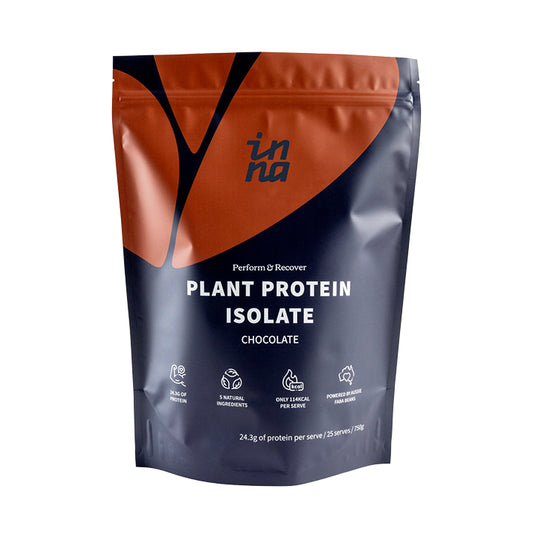
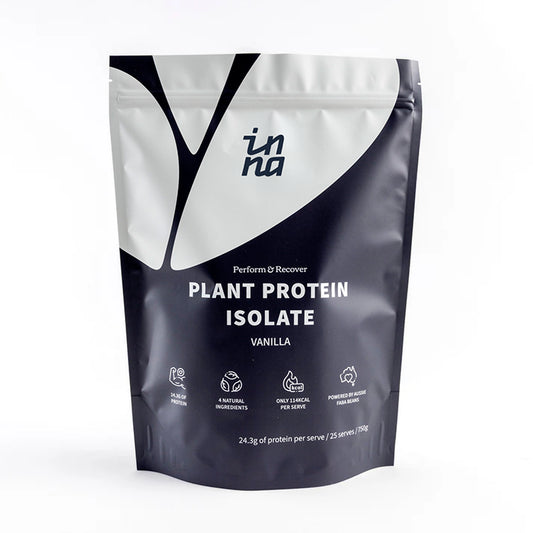
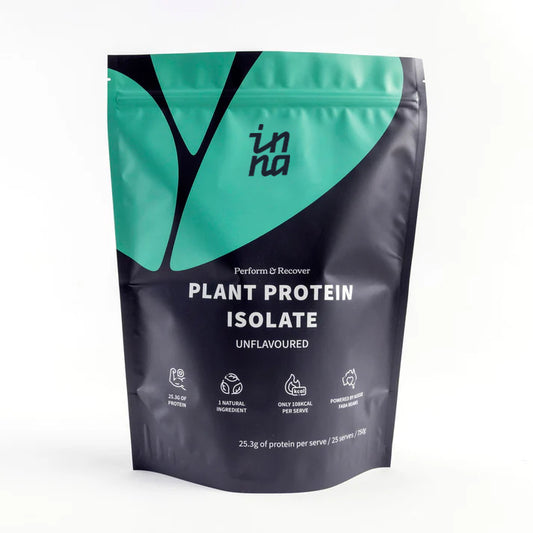
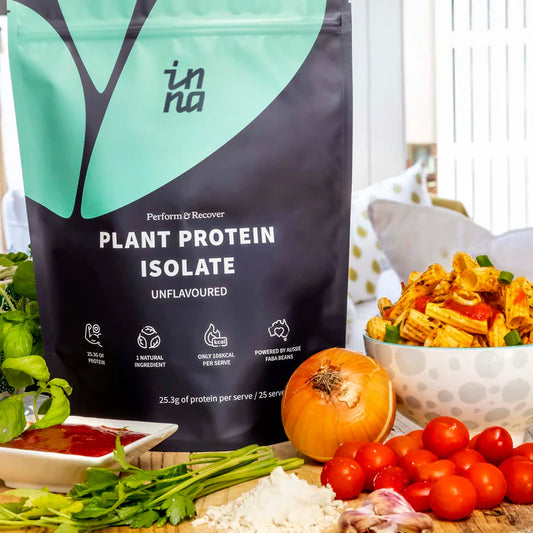
The flavoured versions use natural flavours and natural sweeteners. There's also an unflavoured option that's just the faba bean isolate by itself, which works well stirred into oats, yoghurt, or smoothies without changing the taste. See the full range here.
So, is it worth making the switch?
That depends on what's prompting the question.
If whey's working well for you, there's no compelling reason to change. Both proteins can do the job, and the best protein powder is the one you'll actually use consistently.
But if you're lactose intolerant, dairy-sensitive, or looking for a plant-based option that doesn't compromise on amino acid completeness, faba bean protein is the better pick (if we may say so ourselves!). It's one of the few plant proteins that covers all nine essential amino acids without needing to be blended with another source.
Most people who switch for digestive reasons notice a difference fairly quickly. Those who switch for dietary or environmental reasons tend to find it a seamless swap.
The flavour is milder than most whey powders, which makes it easy to use in food and drinks rather than just shakes. And because it's not trying to replicate the sweetness or creaminess of whey, it tends to sit well in both sweet and savoury contexts.
The take: faba bean protein is a comparable option to whey, not a compromise.


