Free Shipping
 Easy
Easy Money-back


Inna Protein provides 2.1–2.5g of leucine per 30g serving depending on the variety, placing it in a comparable leucine range to many conventional whey products. For people looking for a high-protein, dairy-free alternative to whey, the leucine data supports that case.
The plant protein category has a credibility problem. Too many products claim "complete protein" on the front label and bury a weak amino acid profile in the fine print. As a result, anyone serious about their protein intake approaches plant-based options with justified scepticism.
Inna Protein's leucine numbers are different: specific, verifiable, and worth publishing clearly. A 30g serving of Inna Premium Unflavoured provides 25.3g of protein and 2.5g of leucine. The flavoured varieties (Chocolate, Vanilla, Salted Caramel, Coconut) provide 24.3g of protein and 2.1g of leucine. Those numbers sit within the leucine range associated with stimulating muscle protein synthesis in the research. They overlap directly with many standard whey servings.
The leucine threshold: what it is and why it matters more than total protein
Not all protein is equally useful for muscle. Leucine is the branched-chain amino acid that acts as the primary signal to initiate muscle protein synthesis, the process by which muscles repair and rebuild after exercise. Getting enough leucine per meal matters and goes beyond simply hitting a daily protein target.
A 2021 systematic review in Frontiers in Nutrition evaluated evidence on what researchers call the "leucine trigger hypothesis": the idea that reaching an adequate leucine dose per meal is the key variable in maximising muscle protein synthesis rates. The review confirmed that leucine intake per serving meaningfully affects the anabolic response, with research generally pointing to approximately 2–3g of leucine per meal for younger adults and closer to 3g for older adults.
This is why leucine content matters as a specific metric. A protein delivering 25g per serving with only 1g of leucine will produce a different anabolic response than one delivering the same 25g with 2.5g of leucine. The grams aren't the whole story.
How much leucine does Inna Protein contain?
Inna is made from Australian faba bean isolate, a high-purity form of faba bean protein that concentrates both protein and amino acid content significantly beyond whole-bean levels.
Here are the specific numbers per 30g serving:
-
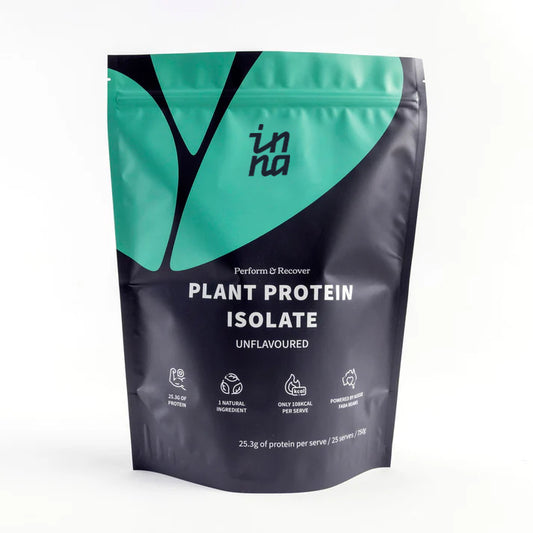
Inna Premium Unflavoured: 25.3g protein / 2.5g leucine
-
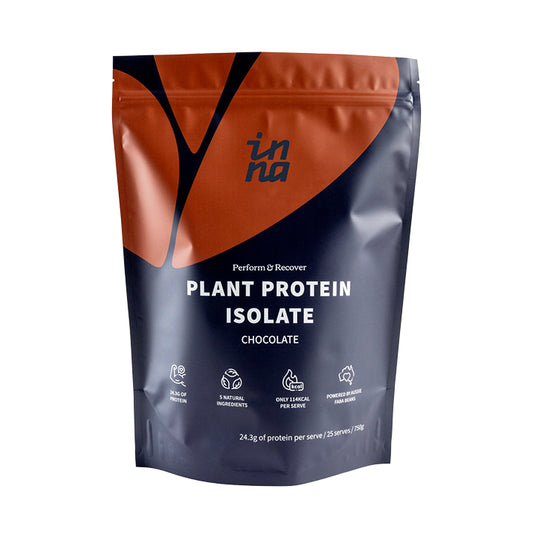
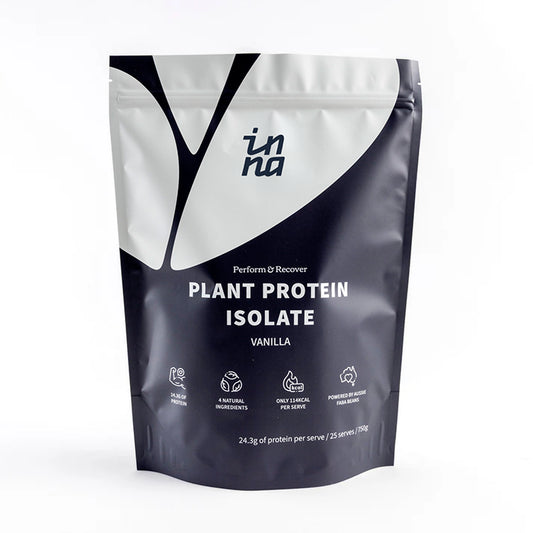
Inna flavoured varieties (Chocolate, Vanilla, Salted Caramel, Coconut): 24.3g protein / 2.1g leucine
The difference between flavoured and unflavoured comes from the natural flavours, stevia, and erythritol in the flavoured range. These take up a small proportion of the 30g serving weight, slightly reducing the protein and leucine per serve. Inna contains 2.5g of leucine for the unflavoured variety, with around 2.1g of leucine per 30g serving for flavoured options.

How does Inna compare to whey on protein and leucine?
Whey protein is generally considered one of the richest leucine sources among protein supplements. Its leucine content typically runs at around 10–13% of total protein by weight, meaning a standard 25g protein serving delivers roughly 2–3g of leucine, depending on the product and purity.
Here's how Inna sits alongside a typical whey serving:
Protein Comparison | Per 30g serving
| Per 30g serving | Inna Unflavoured | Inna Flavoured | Typical Whey* |
|---|---|---|---|
| Protein | 25.3g | 24.3g | ~20–25g |
| Leucine | 2.5g | 2.1g | ~2–3g |
| Protein source | Faba bean isolate | Faba bean isolate | Dairy |
| Vegan | Yes | Yes | No |
| Dairy-free | Yes | Yes | No |
Basically, you're not trading leucine to go plant-based with Inna protein!
Does faba bean protein contain all essential amino acids?
Research on faba bean protein confirms that faba bean isolate contains all nine essential amino acids, including the branched-chain amino acids (leucine, isoleucine, and valine) most directly involved in muscle protein synthesis. Its overall amino acid profile is broadly comparable to pea protein and soy.
The nuance worth knowing: like most legume-based proteins, faba bean is relatively lower in the sulphur-containing amino acids methionine and cysteine compared to animal proteins like whey. For most people eating a varied diet, this is unlikely to affect outcomes. And for anyone using a protein supplement primarily to increase total protein and leucine intake, faba bean isolate delivers what matters most.
Faba bean isolate's strength relative to other plant proteins is its leucine content. Most plant proteins sit below 2g of leucine per standard serving. Inna's 2.1–2.5g per 30 g serving puts it in territory that most plant-based competitors don't reach.

Who should consider Inna as a whey alternative?
If you currently use whey and you're looking for a dairy-free option, Inna's protein and leucine numbers suggest you don't have to give up anything meaningful. The serving-to-serving comparison holds up.
If you're plant-based and actively trying to support muscle growth or recovery, Inna sits at the top end of the plant protein category on both protein content (24.3–25.3g per 30g) and leucine (2.1–2.5g per 30g). Most plant proteins don't get close to those numbers.
If you're building toward a higher daily protein intake (80g, 100g, or more), you need a supplement that contributes meaningfully per serve rather than padding numbers with fillers. At 25.3g protein per 30g, Inna pulls its weight.
Inna is Australian-made, uses faba bean grown in Australia, and contains no artificial sweeteners. If those factors matter to you alongside the leucine numbers, it's a straightforward choice.
The unflavoured variety delivers the highest leucine per serve (2.5g). You can try a sample here before committing to a full bag. If you prefer a flavoured option, the full range is here. All flavours deliver 2.1g leucine per 30g serve.
Not sure switching from whey makes sense for you at all? Start with our full breakdown here: Faba Bean Protein vs Whey: Is It Worth the Switch?.