 Free Shipping
 Easy
Easy Money-back


Protein has a genuine, evidence-backed role in weight management through three main mechanisms: it increases satiety, burns more calories in digestion (a higher thermic effect), and helps preserve lean muscle during a calorie deficit. Protein powder is a practical way to hit a higher daily protein intake, but it's not a fat-loss product on its own.
The most honest thing you can say about protein powder and weight management is this: it helps, but not the way most supplement marketing suggests.
Most products are positioned as fat-burning tools. What the evidence actually shows is something quieter and more durable. Protein is one of the most satiating macronutrients. It costs your body more energy to digest than carbs or fat. And it helps protect muscle when you're eating in a deficit. None of those are dramatic claims. Together, they make a solid basis for using protein as part of a weight management approach.
Why does protein make you feel fuller for longer?
Of all the ways protein supports weight management, satiety is the most well-established.
When you eat a protein-rich meal, your body releases more hormones that signal fullness (particularly GLP-1 and PYY) than it does with a carbohydrate-heavy meal. A review in the American Journal of Clinical Nutrition found that 71% of studies examining higher-protein meals reported at least one beneficial change in appetite measures, including reduced hunger and greater feelings of fullness.
The practical result: you're less likely to graze between meals, reach for a snack, or eat a larger portion at the next sitting. That's not willpower; it's physiology. And it repeats across studies consistently enough to rely on.
For protein powder specifically, this means that swapping a lower-protein breakfast or snack for a protein shake can make it easier to maintain a consistent calorie intake without constant restriction. You're not white-knuckling it. You're just less hungry.
Protein doesn't trick you into feeling full. It uses the same hormonal pathways your body already relies on.
The thermic effect: protein burns more calories in digestion
Every macronutrient requires energy to digest, absorb, and metabolise. The energy your body uses in this process is called the thermic effect of food, and protein's thermic effect is significantly higher than carbohydrates or fat.
Research published in the journal Obesity puts the numbers clearly: dietary protein costs 20–30% of its usable energy to metabolise, compared to 5–10% for carbohydrates and 0–3% for fat.
In plain terms: if you eat 100 calories of protein, your body burns roughly 20–30 of those calories just processing it. The same 100 calories of fat costs almost nothing to digest.
This doesn't mean protein calories are free. But it does mean two diets with the same total calorie count can produce different results if one is higher in protein because your body does considerably more work to process it. The difference isn't massive on any given day. Over weeks and months, it compounds.
The thermic effect is real, measurable, and consistent across research. It's one of the least-hyped and most underrated reasons to prioritise protein.

Does protein powder actually help with weight management?
Research on protein supplementation specifically, as opposed to dietary protein from whole foods, is generally positive, but comes with important context.
A 2024 review of the evidence on protein supplementation summarised data from 22 separate studies involving 680 participants. It found that protein supplementation led to significantly greater gains in fat-free mass and lower-body strength compared to control groups. Preserving lean muscle matters for weight management because muscle tissue uses more energy at rest than fat tissue does.
Australian-specific research is also worth noting. A study in Public Health Nutrition found that plant-based dietary patterns were associated with lower body weight, BMI, and waist circumference in older Australian women, suggesting that where your protein comes from may matter too, not just how much you're eating.
What the research doesn't show cleanly is that protein powder causes fat loss without other changes. The studies that show meaningful results almost always pair supplementation with exercise or a broader dietary approach. Protein powder is a useful tool, but it's most useful as part of a consistent overall approach, not as a standalone intervention.
Does the type of protein matter?
Most weight-management research uses whey protein, which makes sense given how dominant it's been in the market. But the mechanisms behind protein's weight management benefits - satiety, thermic effect, muscle preservation - are tied to protein itself, not the specific source.
Plant proteins, including faba bean protein, still stimulate the same satiety hormones. They still carry the same thermic advantage over carbohydrates and fat. The main question for plant proteins has historically been amino acid completeness, whether they contain all nine essential amino acids in sufficient quantities. Faba bean protein is one of the more complete plant protein sources, with an amino acid profile closer to animal proteins than most legume-based alternatives.
A 2024 review in Frontiers in Endocrinology also noted that animal-based protein (but not plant-based protein) may be adversely associated with obesity development. Research on plant protein and weight outcomes is still developing, but the evidence doesn't suggest plant-based protein is a weaker choice for weight management.
If you've been using whey and you're thinking about switching, the evidence supports making that shift without worrying about leaving anything meaningful behind.


What protein powder won't do
It's worth being direct about the limits of the research.
Protein powder won't overcome a meaningful calorie surplus. It won't substitute for sleep, stress management, or physical activity. And it won't produce body composition changes without some consistency in the broader diet.
The supplement industry has long positioned protein powder as more transformative than the evidence supports. Protein plays a real role in weight management, but it's supportive, not causal. You won't drink a shake and lose weight. What you're going to do is use protein as a tool that makes sustainable eating slightly easier: less hunger between meals, more muscle preserved during a deficit, a diet that's easier to maintain over time.
That's worth a lot. It's just not everything.
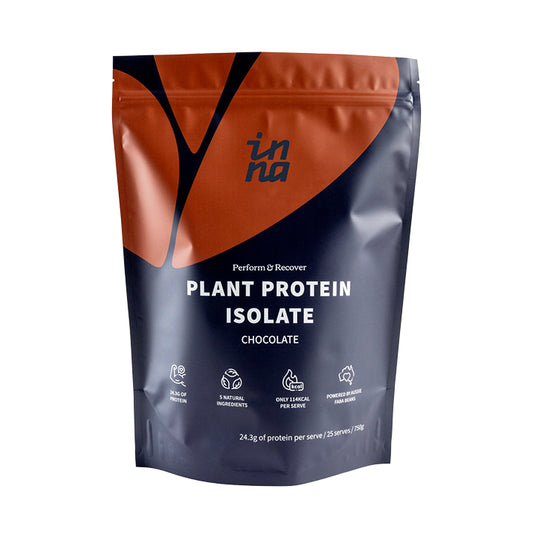
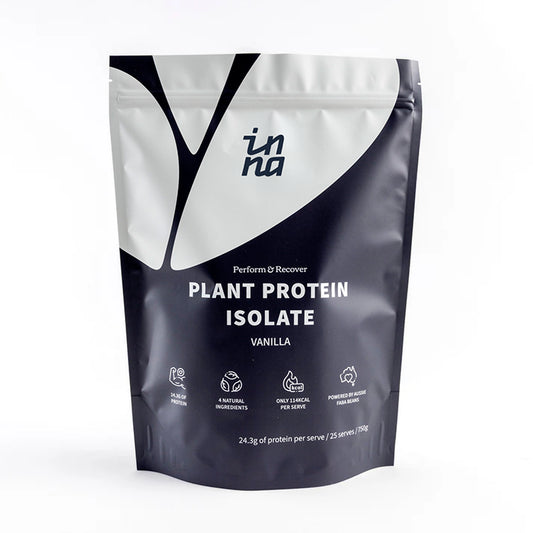
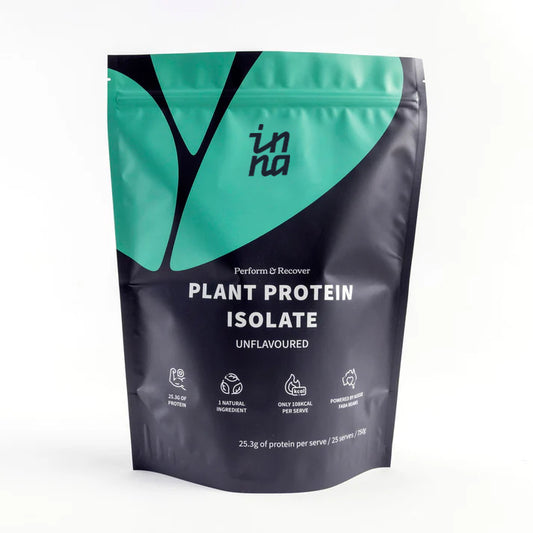
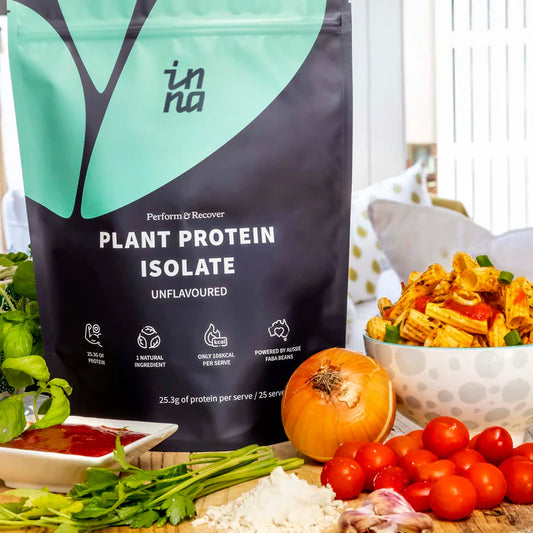
If you're curious about Inna Protein's faba bean protein, made in Australia with minimal ingredients and no artificial sweeteners, you can explore the range here or try a sample before committing to a full bag.
How much energy does your body burn digesting each macronutrient?
Thermic Effect of Food (TEF)
Source: Sutton et al. 2016, Obesity journal
INNA PROTEIN
Australian faba bean protein


