 Free Shipping
 Easy
 Money-back


Faba Bean Protein
Rich in essential nutrients and naturally high in protein, faba bean protein provides a clean, sustainable option for fueling your body. Perfect for muscle recovery, supporting a balanced diet, or enhancing your wellness journey.
What Is Faba Bean Protein?
Faba bean protein is a plant-based protein isolate made from faba beans (Vicia faba), a legume in the same family as peas and lentils. The beans are dried, milled, and processed to concentrate the protein, leaving a fine, neutral-tasting powder that's roughly 88% protein by weight.
Faba beans themselves are a whole food you'd cook and eat as a vegetable. Faba bean protein is the concentrated ingredient made from them, and it sits in the same category as pea protein, soy protein, or whey, just from a different, and arguably more nutritionally and environmentally beneficial, source crop. We've put together a full rundown on faba bean protein here, covering what it is, how it compares to other plant proteins, and how people use it day to day.

Locally grown
Faba beans belong to the pea and faba bean family of Fabaceae. They're grown right here in Australia, as well as a few other places around the world. In Australia they're grown in winter and are an excellent nitrogen fixing crop, with the plant adding nitrogen to the soil rather than taking it away. This adds to soil sustainability and farm yields, meaning when you use faba bean protein powder you're using a product that's not just good for you but good for the world too! On top of that, faba beans require just 155 litres of water per kilogram, compared to 817 litres for soybeans, 1,775 litres for chicken, and 7,029 litres for beef. The gap is big enough that you could choose faba beans over beef, then reward yourself with a 14-hour shower, and still come out using less water than a single kilogram of beef would have taken.

Complete Amino Acid Profile
Faba bean protein is a complete protein. It contains all nine essential amino acids your body can't produce on its own, the ones responsible for building and repairing muscle tissue, producing enzymes and hormones, and supporting immune function.
That matters because not every plant protein can say the same. Rice protein, for instance, is naturally low in lysine. Faba bean protein doesn't have that gap, including the three branched-chain amino acids (leucine, isoleucine and valine) most directly tied to muscle repair and recovery. We've broken down the full amino acid profile, including exact gram amounts per serve, here, alongside how it stacks up against whey specifically.


What we love about faba bean protein
Faba bean protein isolate has a much cleaner taste than other plant proteins. The main benefit being a super smooth and creamy consistency with no grit, more akin to the taste of whey protein than pea or rice protein.

Gentle on the Tummy
Great for your gut microbiome, digestion, maintaining healthy glucose levels and reducing cholesterol.

High Protein Percentage
With a protein content of 88%, faba bean protein has one of the highest protein percentages of all vegan proteins on the market.

Contains essential nutrients
Packed full of nutrients your body loves. That includes folate, manganese, copper, phosphorus, magnesium, potassium, thiamine and zinc.
Digestibility and Gut Comfort
The most common complaint about plant protein isn't taste, it's how it sits afterward. Faba bean protein tends to be gentler on digestion than pea protein, largely because of two things: finer particle size from processing, so it disperses more easily instead of clumping, and naturally occurring saponins that act as mild emulsifiers. Less clumping in the shaker generally means less bloating in the gut.
That's also why faba bean protein reads as "smooth" and "creamy" rather than gritty. The texture and the digestibility come from the same underlying processing difference. We've gone deeper on the gut health angle specifically here, including the research behind faba beans, fibre, and cholesterol.

Faba Bean Protein vs Pea, Soy and Whey
Here's how faba bean protein actually compares to the alternatives:
vs Pea Protein
Both are complete proteins with similar protein percentages, but faba bean protein has a meaningfully smoother texture. Pea protein's grittiness comes from larger particle size and a greater tendency to clump, faba bean protein's finer particles and natural saponins largely avoid that.
vs Soy Protein
Soy is also a complete, high-protein option, but it's one of the most common allergens. Faba bean protein delivers a comparable protein profile without the allergen risk, making it a more accessible default for people avoiding soy for any reason.
vs Whey Protein
This is the comparison people ask about most, since whey has long been the benchmark for texture and completeness. Faba bean protein is naturally dairy-free and lactose-free, so it tends to be easier on the stomach for anyone with dairy sensitivity, while still covering all nine essential amino acids without needing to be blended with another source. We've written a full comparison against whey here, including the research on muscle-building outcomes and a full amino acid breakdown.
Sustainability
Faba beans are a nitrogen-fixing crop, meaning they improve soil health rather than depleting it, and require a fraction of the water of animal-based proteins. That sustainability carries through the whole process, from how the crop is grown to how the protein is made.


Gluten-free
Entirely gluten-free. Our factory is a HACCP-certified production facility that never sees gluten. If you’re coeliac you’ll know how frustrating it is when brands promise gluten-free on the front of their packaging and then slap a tiny little “may contain traces” on the back in size 4 font. We prefer to be transparent - that means when we say we’re gluten-free, we really are gluten-free.

Dairy-free
We’re a vegan company, so we don’t use dairy in any of our products. But we’ve got especially good news for the lactose intolerant - our HACCP-certified production facility in Melbourne is entirely dairy-free! That means no risk of cross contamination and no mad dashes to the bathroom post smoothie!

Shop Now



Faba Bean Protein Powder FAQ

Faba bean protein powder is a dietary supplement made from the dried and ground seeds of the faba bean, which belong to the pea and faba bean family of Fabaceae. Faba beans are a rich source of plant-based protein and are grown here in Australia (as well as a few other countries). They are a bit of a superfood as they offer high amounts of protein, fibre and other essential nutrients.
With a protein content of 88%, faba beans have the highest protein percentage of any vegan protein on the market!
Yes, faba bean protein powder is low in fat, high in protein, and contains essential amino acids. It's an excellent source of protein for vegans, vegetarians, and people with dietary restrictions or allergies, as it is free from common allergens like soy and dairy. With that said, as it is smooth, creamy and delicious, it's appropriate for pretty much everyone!
Inna Protein (formerly Pure Plant Protein) is the top provider of faba bean protein in Australia. You can buy our various faba bean protein flavours online via our website or from one of the stockists on our growing list (you can even become a Inna Protein partnerhere).
Faba bean protein powder can be used in lots of delicious ways:
- Smoothies: Add a scoop of Inna Protein (formerly Pure Plant Protein) powder to your favourite smoothie recipe to boost protein content.
- Baking: Incorporate faba bean protein powder into recipes for pancakes, muffins, or protein bars to enhance their nutritional value.
- Shakes: Blend it with water and plant-based milk to create a tasty, smooth protein shake.
Note: Always stick to the recommended serving size or consult a healthcare professional for personalised guidance.
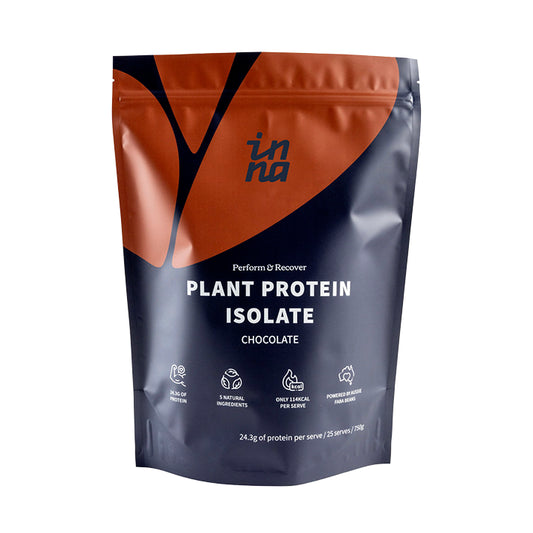
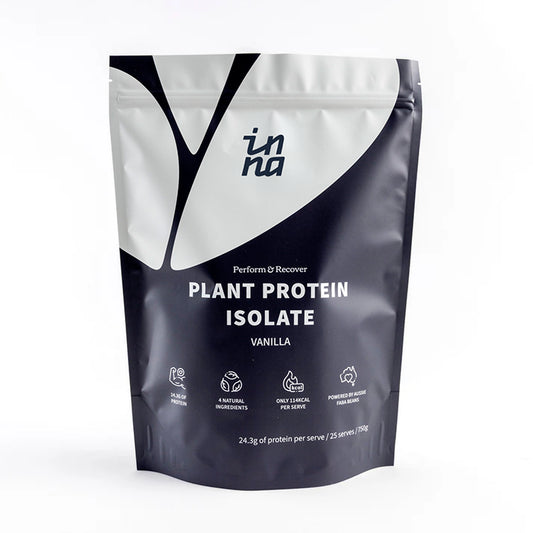
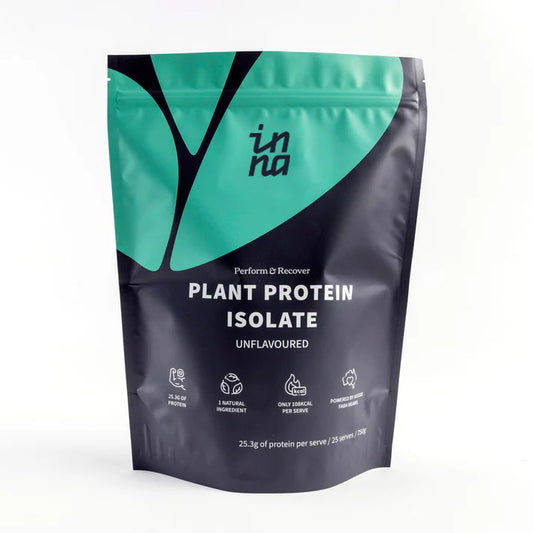
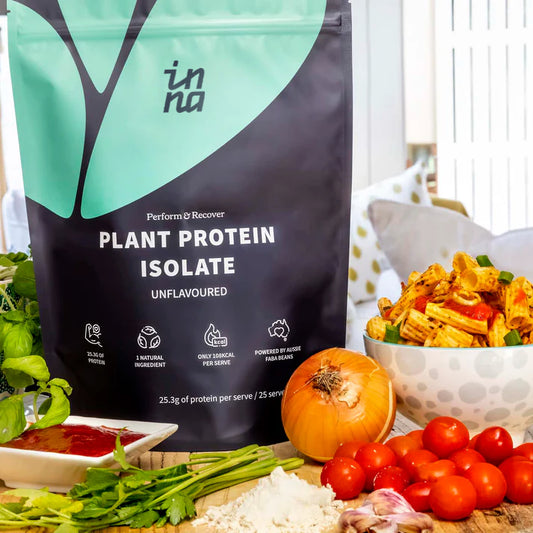
The protein content in Inna Protein (formerly Pure Plant Protein)'s faba bean protein powder per recommended serving of 30g is 24.3, making it the highest protein percentage for any vegan protein available on the market.
- Particle Size and Aggregation: Faba bean protein undergoes processing techniques that result in finer particles compared to pea protein. These smaller particles mix more easily with liquids, leading to a smoother consistency. Additionally, faba bean protein exhibits less aggregation, meaning the individual protein particles are less likely to clump together, further contributing to the smooth texture.
- Natural Emulsifiers: Faba beans naturally contain saponins, which act as emulsifiers. Emulsifiers help disperse and suspend other ingredients, preventing them from separating and forming a gritty texture. This natural emulsification property in faba bean protein contributes to its smooth and creamy mouthfeel.
Pea protein, on the other hand, often has a grittier texture due to larger particle sizes and a higher tendency to clump together. While processing techniques can somewhat improve the texture of pea protein, it typically doesn't reach the level of smoothness and creaminess achieved with faba bean protein.
- High protein content: Faba bean protein is a complete protein, meaning it contains all nine essential amino acids your body needs. It boasts a high protein content, often exceeding 80% per serving.
- Potential digestive benefits: Studies suggest faba bean protein may be easier to digest than some other plant-based proteins, leading to less bloating and discomfort.
- Sustainable source: Faba beans are considered a sustainable crop due to their ability to fix nitrogen in the soil and require less water compared to some other protein sources.
- May be suitable for specific diets: Faba bean protein is naturally vegan, gluten-free, and soy-free, making it a potential option for individuals with specific dietary restrictions.
Yes, faba bean protein is considered a complete protein.
This means it contains all nine essential amino acids that your body cannot synthesise on its own and needs to obtain through your diet. These essential amino acids are crucial for various bodily functions, including building and repairing tissues, producing enzymes and hormones, and supporting immune function.This means it contains all nine essential amino acids that your body cannot synthesise on its own and needs to obtain through your diet. These essential amino acids are crucial for various bodily functions, including building and repairing tissues, producing enzymes and hormones, and supporting immune function.
Yes, faba bean protein powder is suitable for both vegan and vegetarian diets. This is because it meets the following criteria:
- Plant-based source: Faba beans are legumes, making the protein powder entirely derived from plants. This aligns with the vegan and vegetarian principles of excluding animal products from the diet.
- No animal-derived ingredients: Unlike some protein powders that may contain whey (from milk) or other animal-derived ingredients, faba bean protein powder remains free of any animal-based components.
Therefore, faba bean protein powder offers a valuable option for individuals following vegan or vegetarian diets seeking to increase their protein intake from a plant-based source.
Faba bean protein powder generally does not have a strong flavour. Compared to other plant-based protein powders, it often boasts a neutral or mildly beany flavour. This makes it relatively versatile and easier to integrate into various recipes and beverages without overpowering the taste.
Our unflavoured faba protein powder contains 0.15g of magnesium for every 100g.
Our unflavoured faba protein powder contains 0.61g of potassium for every 100g
- Chromium 1.2 mg/kg
- Nickel 1.7 mg/kg
- Cadmium 0.012 mg/kg
- Tin <0.1 mg/kg
- Lead <0.01 mg/kg
- Arsenic <0.01 mg/kg
- Mercury <0.01 mg/kg
- Iron 18.3mg/100g
